
The story
He followed his best mate into a rehearsal room. The rest became heavy metal history.
Before Paul Di’Anno, before the records and before the arenas, there were two East London teenagers called Steve Newhouse and Paul Taylor. One would stand at the microphone. The other would help carry Iron Maiden from the pubs towards the world.
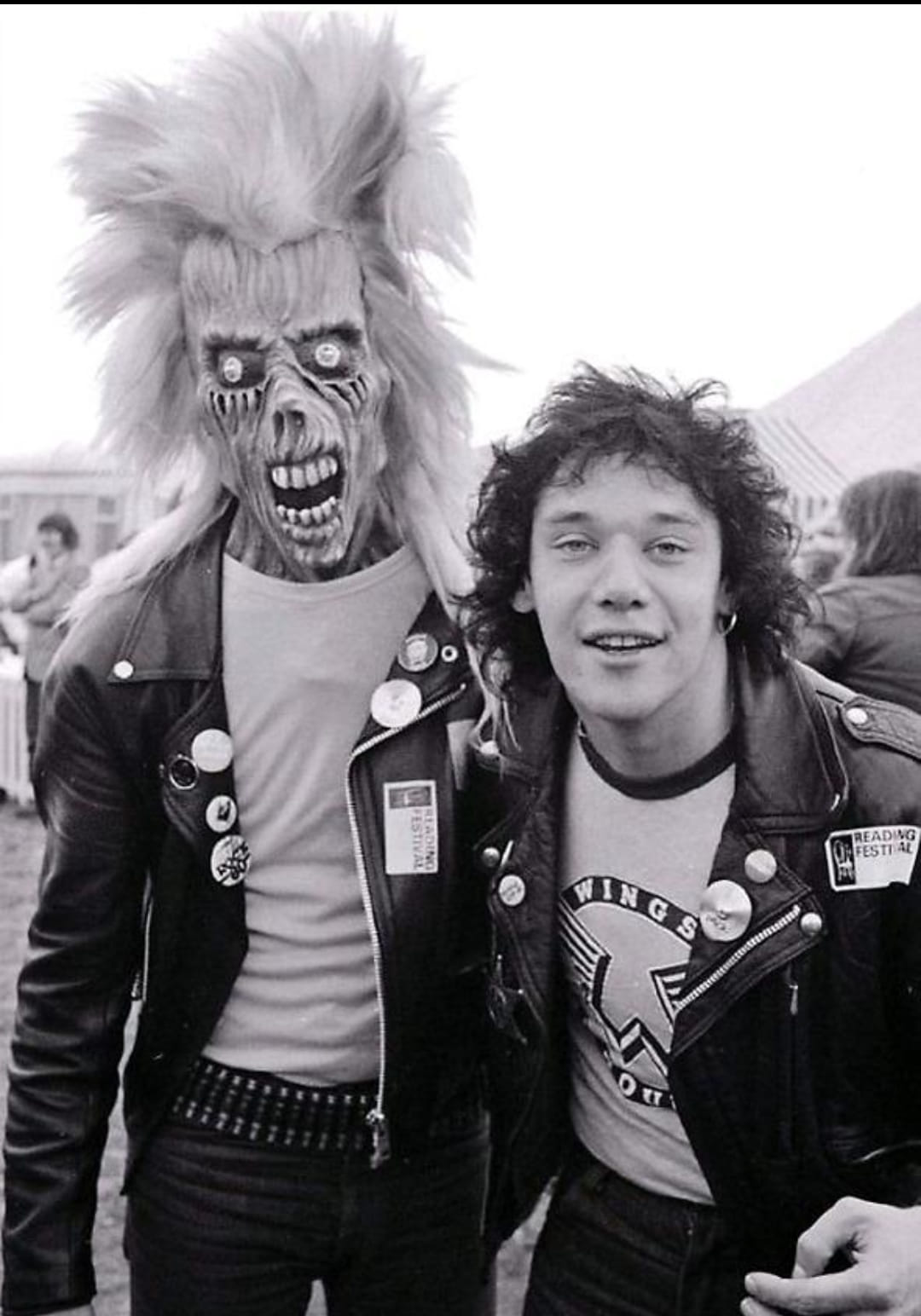
Paul Taylor and Loopy
The story began before Iron Maiden entered it.
Loopy knew Paul when he was still Paul Taylor: an East End mate with hunger, attitude and a voice that had not yet found the band that would make it famous. They had little money, unreliable equipment and no reason to imagine that their ordinary days would one day become part of somebody else’s mythology.
Then Paul was offered an audition. Loopy went with him. Inside that rehearsal room were Steve Harris, Dave Murray and Doug Sampson, working with the discipline and stubbornness of men who could already see something nobody else could. Loopy did not arrive as a historian looking backwards. He entered as Paul’s mate, while the future was still unfinished.
Before Paul Di’Anno, there was Paul Taylor. Loopy was already there.
The first roadie
No qualifications. No plan. Just make sure the show happens.
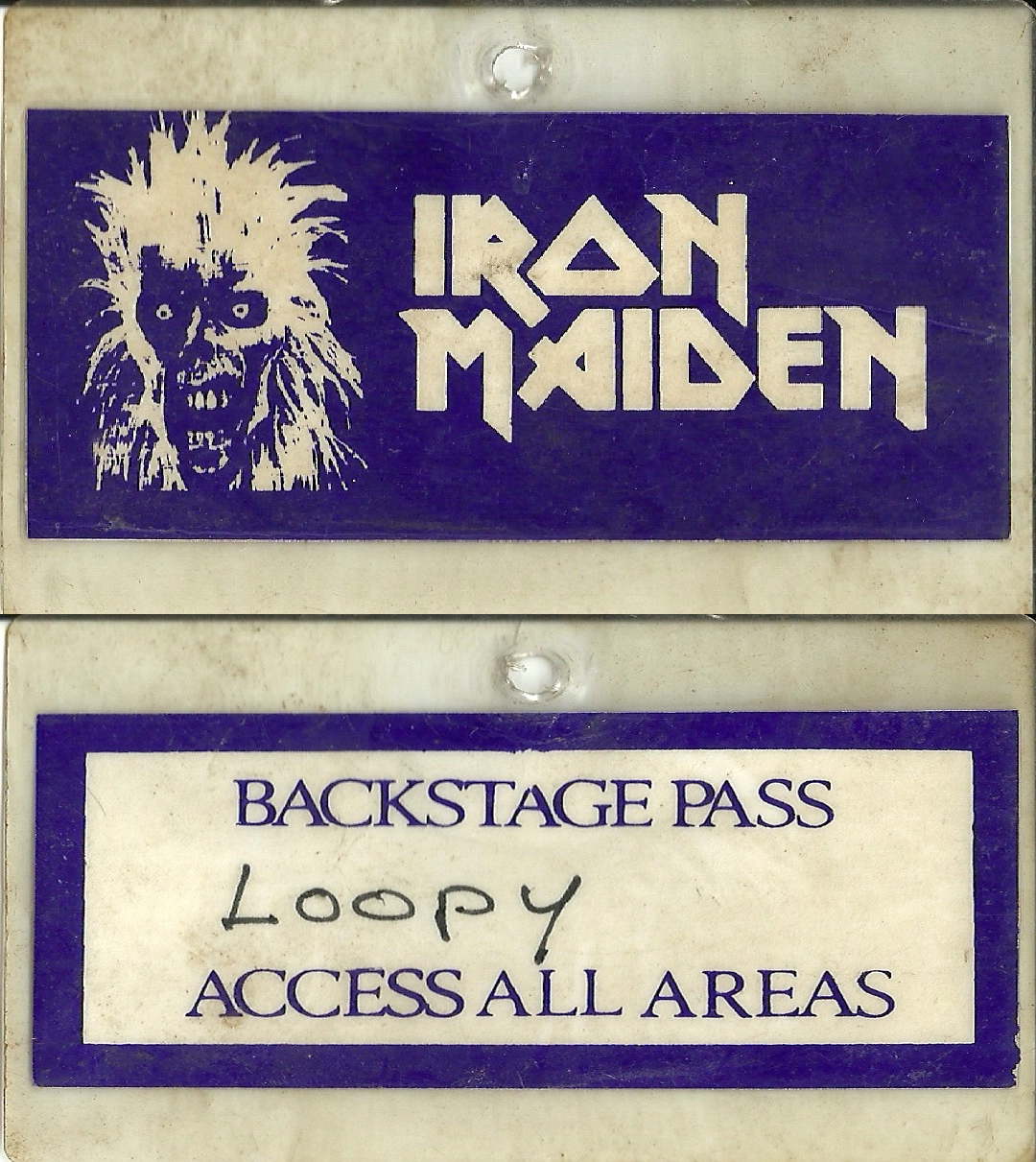
Loopy learned the job by doing it: loading gear, tuning drums, repairing what broke, driving through the night and turning small, hostile rooms into places where Iron Maiden could play. The work was physical, improvised and mostly invisible.
At the Ruskin Arms and the other East London pubs, there was no global metal institution. There was a determined band, a handful of people around them and an audience beginning to understand that something different was happening.
The rise
Then the pub band became a machine.
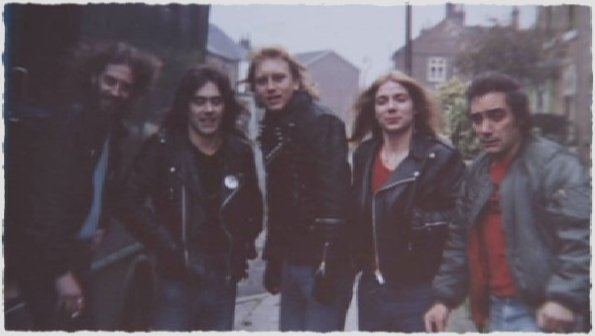
The Soundhouse. The first Eddie, built from plywood, light bulbs, a pump and fake blood. The debut album. Judas Priest. Killers. Europe, Japan and America. Each new step made the stages larger, the journeys longer and the distance from those first East London rooms harder to measure.
Loopy saw the change from the least glamorous position possible: underneath it. Success meant more equipment, more pressure, more people and fewer places to hide when tempers or friendships fractured.
- 1978The rehearsal room
- 1979Ruskin Arms & Soundhouse
- 1980The first album
- 1981Killers around the world
The cost of growing
He helped carry the band towards the world stage. Then the machine outgrew him.
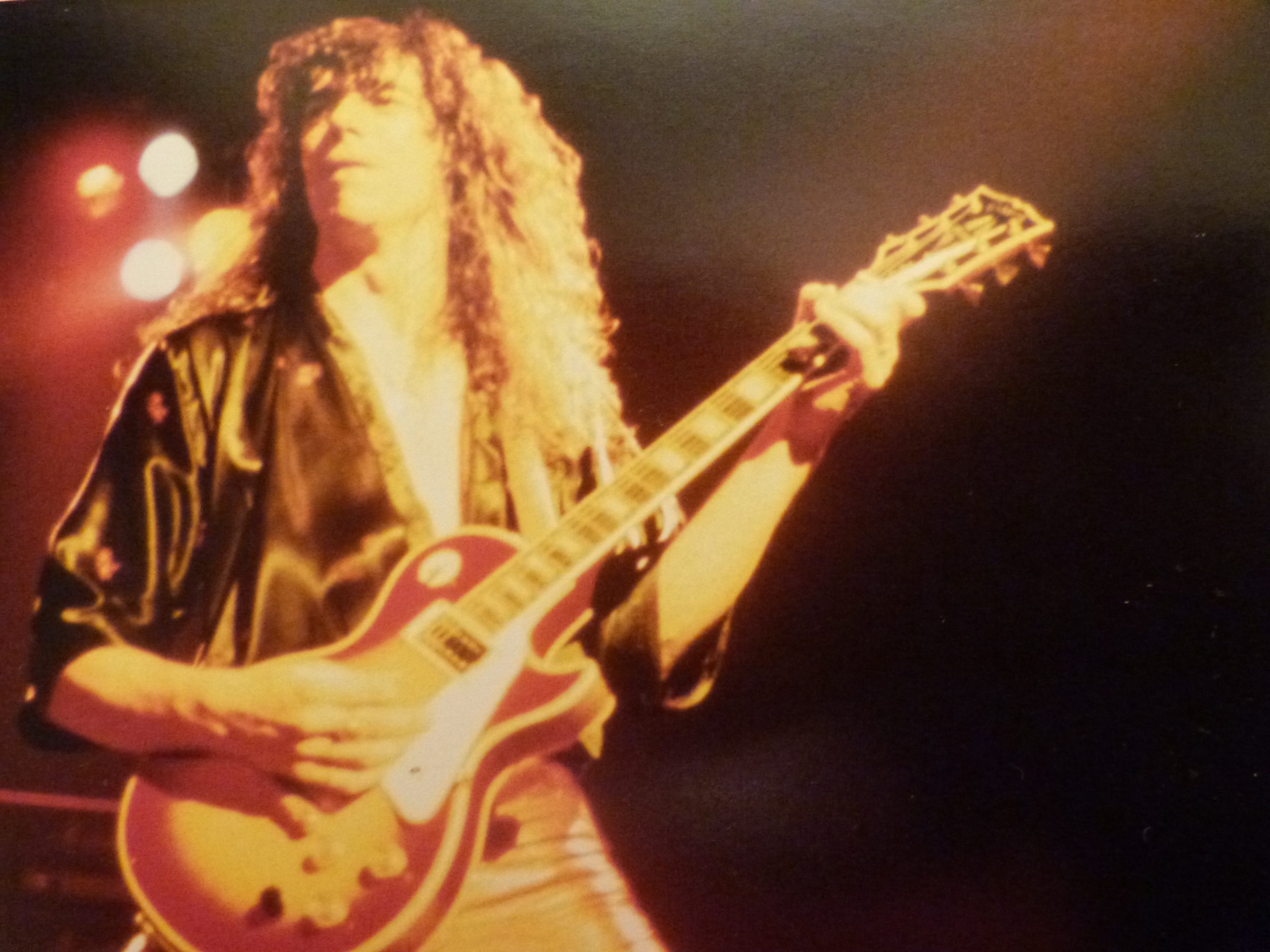
This is not a polished story of uninterrupted triumph. Loopy was dismissed in 1981, returned to work with Iron Maiden in 1983 and was dismissed again in 1984. Between those moments lie hurt, loyalty, arguments, generosity and the strange loneliness of watching something you helped build continue without you.
That is why Loopy’s account matters. He remembers the people inside the legend: Paul’s friendship, Dave Murray’s kindness, Steve Harris stepping in, the rows that passed and the wounds that did not. The book is frank, but it is not revenge. It is what remained when the noise stopped.
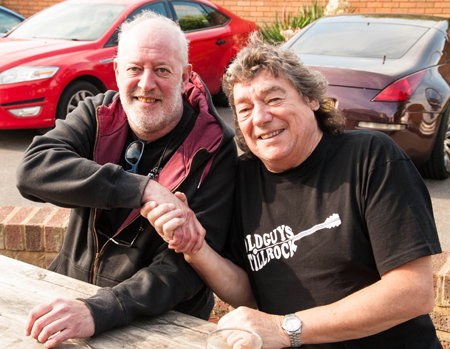
One of the people who was there
He did not interview the early crew. He was part of it.
Years later
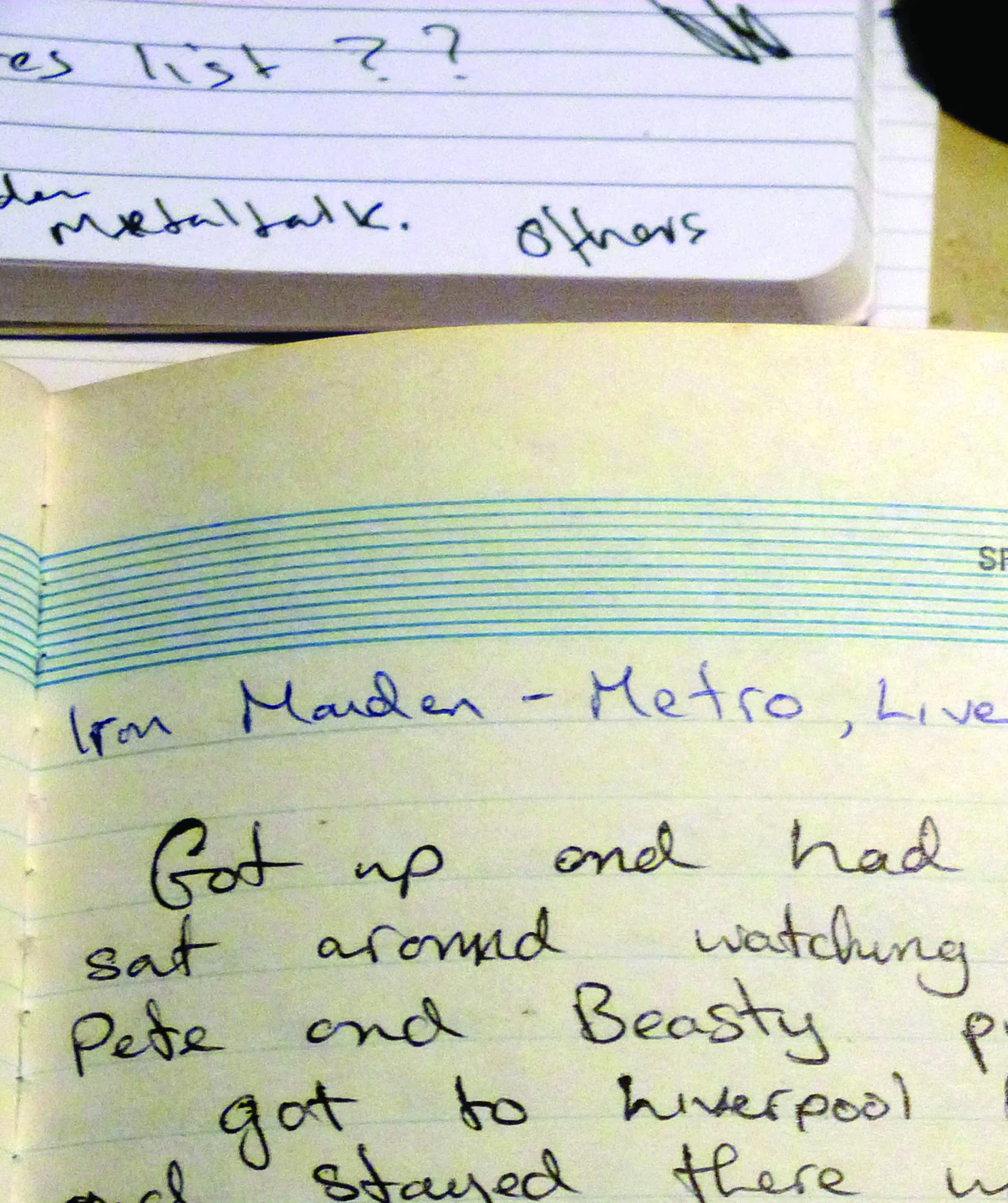
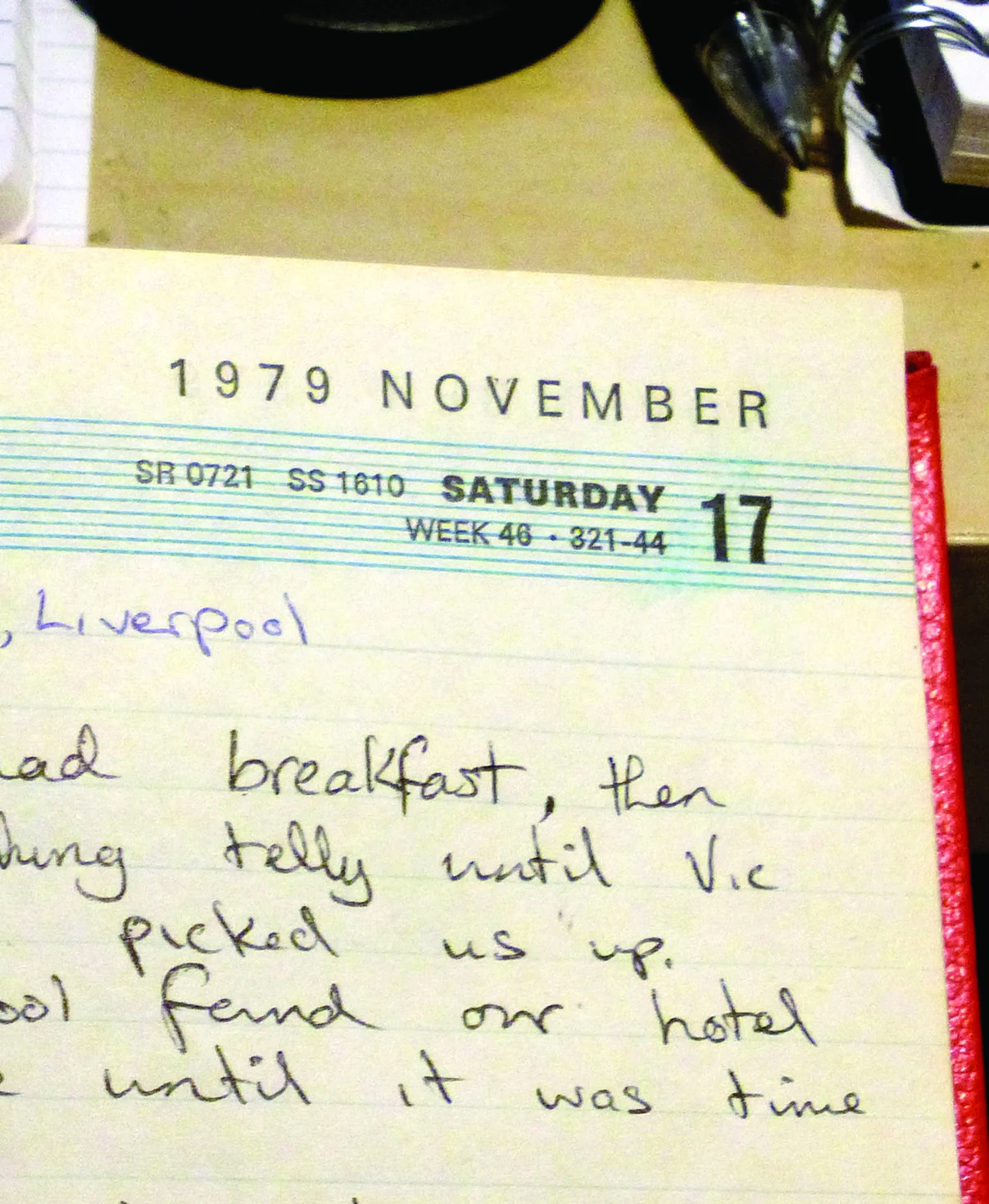
Loopy found the diaries.
After two years writing his memories for MetalTalk.net, Loopy found the diaries he had kept from 1979 onwards. Suddenly the past had dates again: venues, journeys and details that memory alone had blurred.
In late 2015 he was approached about writing a book. In February 2016 he returned to the old columns, adding, removing and completely rewriting them around the evidence preserved in those pages.
“My memory of those times isn’t the best, but my diaries don’t lie.”
He makes no claim to deliver an official verdict. This is Loopy’s version: the highs and lows, laughter and tears, loyalty and beer, as seen by the first roadie standing close enough to be changed by all of it.
Loopyworld: The Iron Maiden Years was published in September 2016 by IzzyFlynn Publishing, with cover artwork created by Derek Riggs specifically for the book.
The story continues inside
Now open the archive.
See the photographs, diary pages, people and years preserved inside the complete 224-page English paperback.
